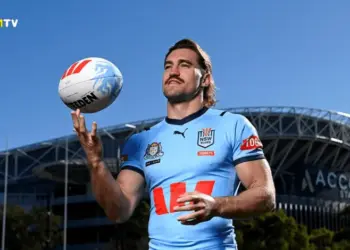
It took Apa Twidle just 26 minutes to announce himself to the NRL world. It took the Perth Bears even less time to decide they wanted him.
In one of the more remarkable transfer stories of the 2026 season, the 21-year-old Parramatta utility has agreed to a three-year deal with the incoming Bears, who will enter the competition in 2027 — leaving the club that developed him for what shapes as a far more prominent role on the other side of the country.
The deal, first reported by the Daily Telegraph, is understood to be in a cooling-off period but is expected to proceed, with Twidle’s camp indicating the offer represents a significant upgrade on anything Parramatta were able to put on the table.

The Debut That Changed Everything
Few NRL debuts have generated as much immediate noise as Twidle’s.
Called into the Eels’ side on Easter Monday after winger Bailey Simonssen went down injured mid-match against the Wests Tigers, Twidle was thrust into first-grade football having barely had time to process what was happening. What followed was the kind of fairytale moment that the game occasionally produces and never quite forgets.
Twidle scored on his first touch of the ball — within 30 seconds of taking the field — then added a second try just minutes later. The remarkable double came with an asterisk: the rookie damaged his AC joint scoring his first try and has been sidelined ever since. But the damage — to the NRL’s collective consciousness, and to Parramatta’s hopes of keeping him — was already done.
In the stands, his mother watched on. Twidle had told her not to make the trip, not wanting the pressure of family in the crowd for what he assumed would be a low-key reserve grade day. She came anyway, and she watched her son score twice in his first three minutes of NRL football.
It was the kind of moment that clubs are built around. The Perth Bears clearly thought so.
Why Twidle Is Leaving
The answer, according to multiple reports, comes down to two things: money and opportunity.
Parramatta, working within the constraints of their salary cap and with established players ahead of Twidle in the pecking order, were only able to offer a development contract worth approximately $80,000 per season. It was, by the club’s own admission, a modest offer for a player whose stock had just risen dramatically.
Perth had no such limitations. As an expansion franchise still assembling their inaugural roster under head coach Mal Meninga, the Bears had both the financial flexibility and the genuine desire to position Twidle as a key piece of their long-term project. Their offer was significantly more lucrative, and more importantly, it came with a clear pathway to regular first-grade football.
The role Meninga has in mind is telling. Twidle’s exceptional versatility — he can play anywhere from fullback to halfback — has been identified as a major asset for a club that is still working out its best combinations. Reports suggest Perth are considering deploying him in the halves alongside Tyran Wishart, who could shift to dummy half to accommodate the move.
For a player who had been earmarked as a utility option at Parramatta rather than a positional starter, the Bears’ pitch was compelling.
The Broader Picture
Twidle’s departure will sting for Parramatta, though some within the club have been pragmatic about the outcome. The reality is that with Dylan Brown now running the show at halfback and established depth across the outside backs, Twidle’s path to consistent first-grade football in blue and gold was far from straightforward, regardless of contract terms.
Still, there will be questions asked about how a player who scored twice on debut — having also registered 12 tries in 21 NSW Cup appearances over the past year — was offered a deal that made the decision easy for him to leave. The Bulldogs and Dolphins also entered the bidding before Perth prevailed, which underlines how highly regarded Twidle was across the competition despite his limited first-grade exposure.
It is a pattern that has played out at Parramatta before: a talented junior emerges, external interest accelerates, and the club finds itself unable to match the market. Whether it reflects a structural issue in the Eels’ recruitment and retention strategy is a debate that will continue well beyond this particular signing.
What Happens Next
Twidle will honour his current Parramatta contract for the remainder of 2026, with his move to Perth taking effect from the start of the 2027 season. He will spend the next 18 months continuing his development at NSW Cup level, with the expectation that he will be ready for a top-30 promotion and regular NRL minutes when the Bears begin their maiden campaign.
For Perth, the signing is another piece of a roster that Meninga is assembling with notable intent. Twidle joins a growing list of young, versatile talents being drawn to the west by the promise of opportunity and the appeal of being part of something new.
For Parramatta, the challenge now is ensuring that when the next Apa Twidle emerges — and at a club with their junior pathways, there will be another one — they are in a position to keep him.