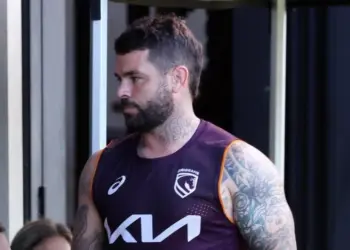
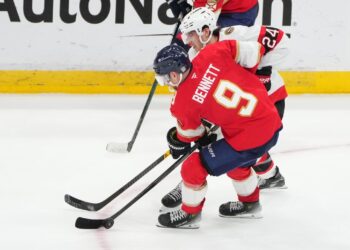
The Sydney Roosters are quietly reshaping their roster mid-season — and the Butcher brothers may be the next casualties of a club building toward a new era.
The news dropped like a bombshell mid-week. The Roosters have reportedly granted utility Connor Watson permission to speak to rival clubs, with the NSW State of Origin representative set to attract attention from a number of teams. But for many inside and outside the club, the Watson situation is not an isolated decision — it is part of a broader, deliberate pattern of change at Allianz Stadium.
Now, according to reports, Nat and Egan Butcher are set to be the next names in the Roosters’ exit conversation.

The Watson Domino Falls First
To understand what is happening with the Butcher brothers, you first need to understand why Connor Watson’s situation matters so much.
The Sydney Roosters told the 29-year-old he can negotiate with rivals while he still has another year on his deal. The message is not a hard farewell, but it is clear enough.
Watson’s place within the Roosters has become precarious following the team’s acquisition of Reece Robson as their main dummy-half. This strategic move has left Watson’s opportunities at the club somewhat diminished. Add to that the NRL’s expanded six-man bench rule in 2026, which potentially limits his role, as teams don’t have to rely on a utility to recover as many positions, and the writing was already on the wall.
The Roosters have granted Watson permission to explore the open market. While not pushing him out, the club is open to him taking a long-term deal elsewhere, with Perth, PNG and Manly all showing interest.
It is a controlled, professional exit strategy — and the same playbook now appears to be opening for the Butcher brothers.
Who Are Nat and Egan Butcher?
For the uninitiated, Nat and Egan Butcher are brothers who have spent their entire NRL careers at the Sydney Roosters — both having come through the club’s junior system since their teenage years.
Nat Butcher epitomises what it means to be a Rooster with his efforts both on and off the field. His selfless nature has seen him move between the front row, second row, lock and the bench throughout his eight seasons in the NRL. He is a 2019 premiership winner and one of the club’s most loyal servants, having made his debut for the Roosters in 2016 as a 19-year-old.
Egan, the younger of the two, is able to play anywhere in the forward pack and has been a versatile weapon off the bench since his debut in 2021. His journey has not been without setbacks — he was ruled out for the rest of the 2024 season after tearing his ACL, before re-signing with the club until the end of 2027.
Both brothers are currently contracted through to the end of 2027, which makes this situation all the more significant. Just like Watson, being moved on would not be a straightforward free agent departure — it would require the club to facilitate an early exit.
A Club in Transition
The Roosters’ 2026 squad tells the real story of where the club is heading. The arrival of Daly Cherry-Evans as well as the return of Victor Radley from suspension signals that Trent Robinson is building around a refreshed core. With Spencer Leniu anchoring the front row and a wave of younger forwards emerging through the system — including Siua Wong and Salesi Foketi — the competition for bench spots has never been more intense.
In that environment, experienced but expensive forwards on multi-year deals become an asset the club may prefer to convert into salary cap space. The NRL’s new six-man bench rule, which restricts actual game-day usage to four players, means that depth, rather than just starting-side quality, has become the primary determinant of success — but it also means clubs need to be smarter about which depth players they are carrying and at what cost.
For the Butcher brothers, the question is no longer whether they are good enough. Both have proven their worth in the NRL over many seasons. The question is whether the Roosters’ long-term vision still has room for them at the rates they are currently being paid.
What Happens Next?
The Roosters appear to be leaving room for a solution that suits both sides — players secure stability, while the club avoids an abrupt break. That same controlled approach, applied to the Butcher brothers, would likely see the club open conversations with rival clubs on their behalf — similar to what has already been set in motion for Watson.
For Nat, at 29, a move could actually reinvigorate a career that has plateaued somewhat in terms of opportunity. For Egan, still only in his mid-twenties and coming off an ACL recovery, the prospect of a fresh start somewhere he is guaranteed more game time may be exactly what his development needs.
The NRL market is active. Both the Perth Bears and PNG Chiefs could look to sign Watson as they both put together a roster for upcoming seasons — and that same expansion appetite makes both Butcher brothers attractive targets for clubs building their depth.
The Bigger Picture
What is unfolding at the Roosters right now is not a crisis — it is a calculated rebuild in plain sight. Trent Robinson has always operated this way: quietly, deliberately, and without sentiment when it comes to the business of football.
Watson was one of the most popular figures in the dressing room. The Butcher brothers have given the club nearly two decades of combined service between them. None of that changes what the data, the cap, and the future require.
For Roosters fans, this is a bittersweet moment. These are not fringe players being shown the door — they are club stalwarts. But the NRL waits for no one, and the Roosters are clearly determined to be ready for whatever comes next.
The only question remaining is: which rival clubs will be smart enough to pick up the phone first?