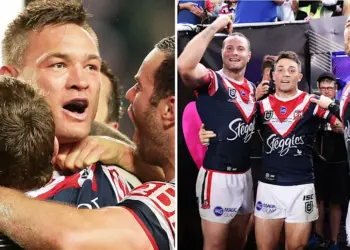
The Sydney Roosters are preparing to roll out one of the competition’s most unconventional spines — and it could reshape how they attack in 2026.
Rather than sticking to a traditional organiser-dominant structure, the Roosters are leaning into flexibility, speed and dual-playmaking.

What Makes It Unconventional?
Instead of a clear-cut controlling half and supporting five-eighth, early mail suggests a shared-responsibility model:
- Two ball-players alternating first receiver
- A hooker with licence to run more than distribute
- A fullback heavily involved in early-set touches
The aim? Unpredictability.
Tactical Breakdown
1. Shared Game Management
Rather than funneling everything through one chief organiser, the Roosters are expected to split kicking and set-shaping duties. This reduces defensive targeting and keeps opposition edges guessing.
2. Hooker as Momentum Spark
Expect increased dummy-half darts and short-side raids. A faster ruck approach allows the No.9 to challenge retreating markers rather than simply shovel passes.
3. Fullback as Third Playmaker
The modern NRL fullback is more than a support runner. Early signs suggest the Roosters want their No.1 sweeping both sides, chiming in on block plays and injecting late into shape.
Why It Could Work
The NRL’s faster interpretations reward instinct and speed. An unconventional spine thrives in chaos — particularly against structured defensive systems that prefer predictability.
By rotating playmakers and encouraging movement across the park, the Roosters may sacrifice some early-season polish for long-term unpredictability.
The Risk Factor
With innovation comes volatility. Timing, communication and defensive alignment must be sharp. If cohesion lags, critics will question why the Roosters didn’t stick to a simpler blueprint.
But internally, the belief is clear: ceiling beats safety.
If it clicks, Sydney won’t just control games.
They’ll scramble them.